
Water Routed Away From Foundations Permanently
Downspout Drain Installation in Zanesville for standing water, foundation protection, and erosion control
Water pooling near the foundation after every rainstorm, soil erosion along the house perimeter, and basement moisture problems often trace back to downspouts dumping roof runoff directly against the building instead of routing it away from the structure. Old Iron Land Works llc installs underground downspout drainage systems throughout Zanesville, redirecting water from gutters to discharge points that protect foundations and prevent the saturated soil conditions that lead to settling, cracking, and interior water intrusion. Heavy rainfall events common in Ohio overwhelm surface splash blocks and above-ground extensions, making underground routing the only reliable long-term solution.
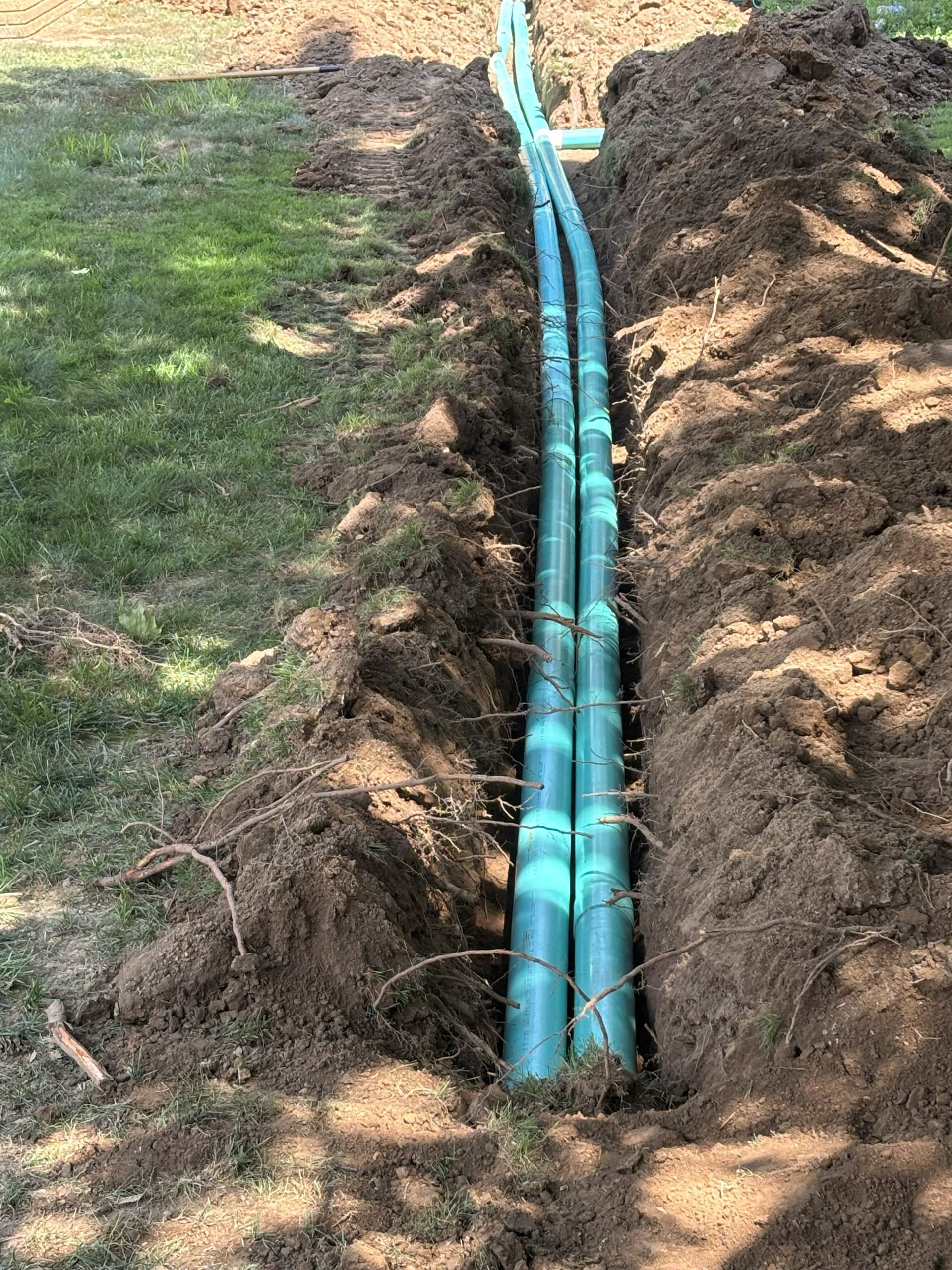
Downspout drains involve trenching from each downspout to a discharge location, installing buried pipe that carries water away from the house, and grading the route to maintain positive flow without low spots where debris could clog the line. Proper installation prevents the runoff concentration that creates bare spots in landscaping, washes out mulch beds, and keeps basements damp even when the foundation appears structurally sound.
Schedule a drainage inspection to identify runoff issues, foundation concerns, and underground routing options for your property.
Why Underground Routing Works for Runoff Control
Installation begins with mapping the drainage route from downspouts to a suitable discharge point, which might be a yard area with natural slope, a drainage swale, or a connection to an existing stormwater system depending on property layout. Trenching depth accounts for frost protection and maintains enough slope to keep water moving without creating standing sections where sediment accumulates, and pipe is bedded in gravel to support the line and improve drainage around the conduit itself.
After installation, you'll notice water no longer pools near the foundation during storms, the soil along the house stays drier between rainfall events, and erosion stops stripping mulch or creating channels along the perimeter. The system operates invisibly—roof runoff disappears into the downspout and emerges at the discharge point without affecting the yard between, which maintains landscaping and eliminates the tripping hazard of above-ground extensions.
Clean installation methods minimize impact to existing landscaping, with trenches excavated to the width needed for pipe installation and backfilled promptly to allow grass or plantings to reestablish. Solutions address multiple downspouts across the property, particularly on homes where several roof areas concentrate water into a few discharge points that create localized flooding during heavy rain.
Questions Before Starting Your Project
Downspout drainage projects depend on roof size, property slope, and where water can be safely discharged, and homeowners typically ask about installation impact, system longevity, and what the work includes.
What problems indicate the need for underground downspout drains?
Standing water within a few feet of the foundation, basement moisture that worsens during rainstorms, and visible erosion along the house perimeter all suggest roof runoff isn't moving far enough away from the structure to prevent damage.
How far should downspout drains extend from the house?
Drains typically run at least ten to fifteen feet from the foundation to discharge in areas where water disperses naturally without flowing back toward the building, though distance varies based on yard slope and soil drainage characteristics in Zanesville.
What happens to landscaping during downspout drain installation?
Trenching creates temporary disturbance along the drainage route, but turf and plantings typically recover within one growing season after backfilling and restoration, especially when installation occurs during periods of active growth.
How does grading affect downspout drain performance?
Proper grading ensures water flows consistently through the pipe rather than backing up during heavy rainfall, and prevents low spots in the line where debris could settle and reduce capacity over time.
When should downspout drains be installed?
Installation can occur whenever ground conditions allow excavation, though addressing drainage problems before seasonal rainfall or snowmelt prevents repeated foundation exposure to moisture that accelerates deterioration and increases the risk of interior water issues.
Old Iron Land Works llc routes drainage systems with attention to property-specific conditions, minimizing yard disruption while solving the runoff concentration that causes foundation and erosion problems. Request an installation estimate to address standing water and protect your foundation from ongoing moisture exposure.