Land That Stays Where You Put It
Erosion Management in Zanesville for sloped properties, pond areas, driveways, and disturbed land experiencing washouts and soil loss
Slopes that lose soil during every rainstorm reveal a failure in how water moves across the land, stripping topsoil, cutting channels, and destabilizing the ground beneath driveways, pond edges, and graded areas. Erosion management solutions stabilize soil and protect land from runoff damage through grading corrections, drainage improvements, and water control strategies that reduce erosion risks on residential and rural properties throughout Ohio. When you see sediment washing into low areas, exposed subsoil where vegetation once grew, or gullies forming after moderate rainfall, the underlying issue involves water velocity exceeding the soil's ability to resist displacement.
The process begins with assessing where erosion occurs, what flow patterns create concentrated runoff, and how slope angle and soil composition contribute to instability. Grading corrections reduce slope steepness in vulnerable areas, while drainage improvements control the speed and volume of water moving across exposed soil, preventing the scouring action that removes material and creates deeper channels over time.
Request an erosion assessment to evaluate land stability and develop site-specific protection strategies.
What Proper Erosion Control Requires
Effective erosion management addresses both the immediate damage and the conditions that allow future soil loss, combining structural changes that alter water flow with soil stabilization techniques that resist displacement. Solutions are tailored to the specific challenges of sloped properties, pond areas, driveways, and disturbed land, each presenting different erosion mechanisms and requiring different control approaches.
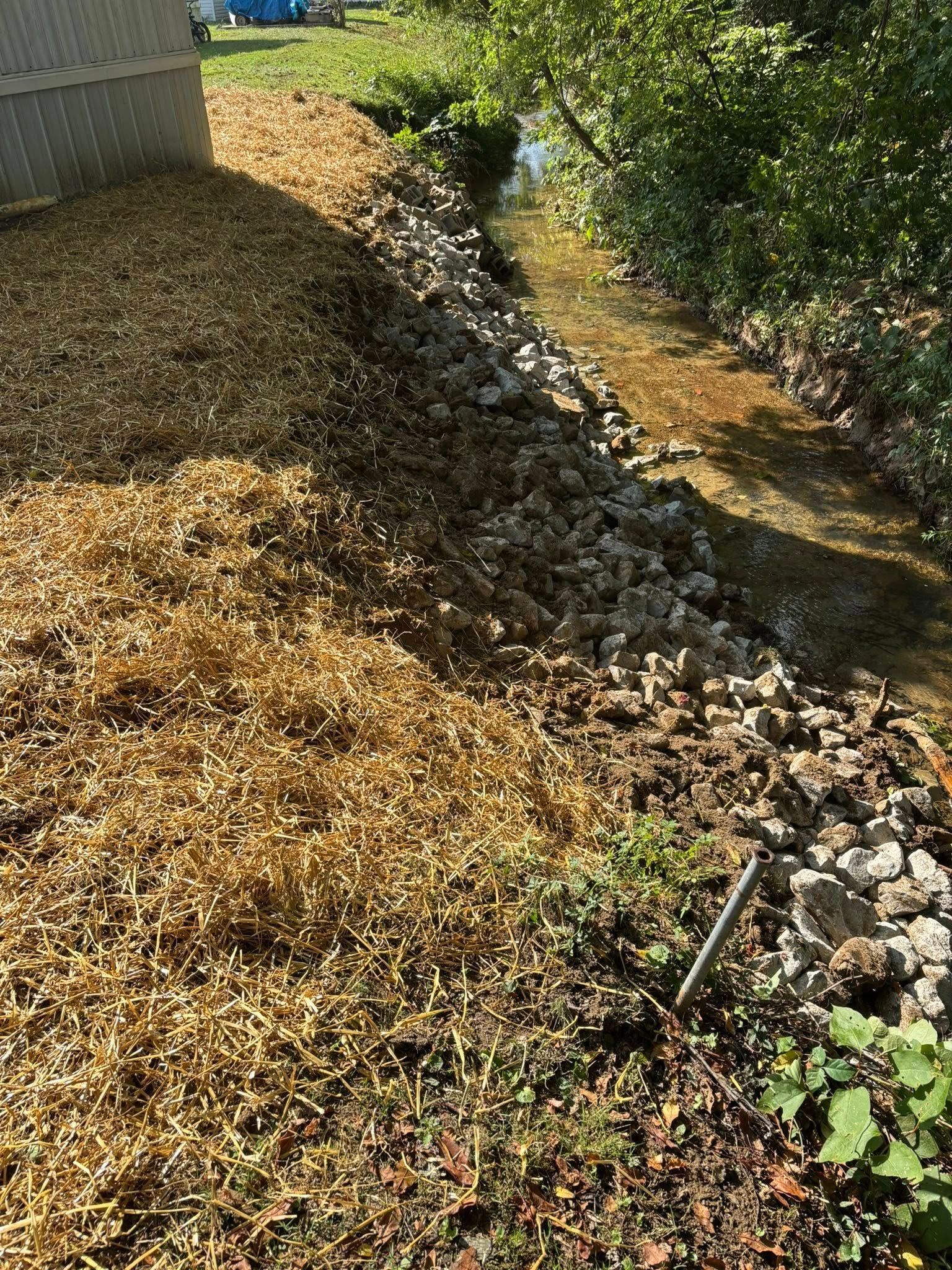
Once erosion control measures are implemented, previously damaged areas show restored soil coverage, slopes that hold during heavy rainfall instead of washing out, and driveways where gravel or surface material remains in place rather than migrating downhill. Water moves across the land in controlled patterns that disperse energy and prevent concentrated flow from cutting new channels or deepening existing ones.
Old Iron Land Works llc restores damaged areas while helping prevent future washouts and drainage problems through strategies that account for seasonal rainfall intensity, freeze-thaw cycles that weaken soil structure, and the long-term performance of stabilization methods under varying weather conditions. The approach considers not just stopping current erosion but maintaining stability as vegetation establishes and soil structure rebuilds over multiple growing seasons.
Common Questions About Land Stabilization
Property owners facing erosion damage and soil loss often need clarity on how stabilization solutions function and what conditions influence their effectiveness.
Why does erosion worsen on slopes after initial grading work?
Freshly graded slopes expose loose, unconsolidated soil that lacks the root structure and compaction to resist water flow, making immediate stabilization critical before the first significant rainfall event tests the disturbed surface.
How do drainage improvements reduce erosion on sloped terrain?
Controlled drainage systems intercept runoff before it gains erosive velocity, directing water into stabilized channels or dispersion areas that slow flow and allow sediment to settle rather than transporting soil downslope.
What causes gullies to form in previously stable areas?
Gully formation typically begins when a small channel concentrates flow during heavy rainfall, creating enough velocity to dislodge soil particles; once started, the channel deepens with each storm as water follows the path of least resistance and erodes more material.
When should erosion control be addressed on rural properties in Zanesville?
Stabilization work is most effective before spring rains when soil can be properly graded and protected, allowing vegetation or structural controls to establish before high-intensity storms test the system's capacity.
What's the difference between controlling erosion on pond edges versus driveways?
Pond edges require solutions that withstand constant saturation and wave action from wind, while driveway erosion typically involves surface runoff cutting channels across compacted material, each demanding different stabilization techniques and materials.
Old Iron Land Works llc provides erosion management designed for the soil conditions, slope angles, and rainfall patterns affecting properties throughout Zanesville. Arrange a site visit to discuss land stabilization plans that address your property's specific erosion concerns and long-term protection needs.