
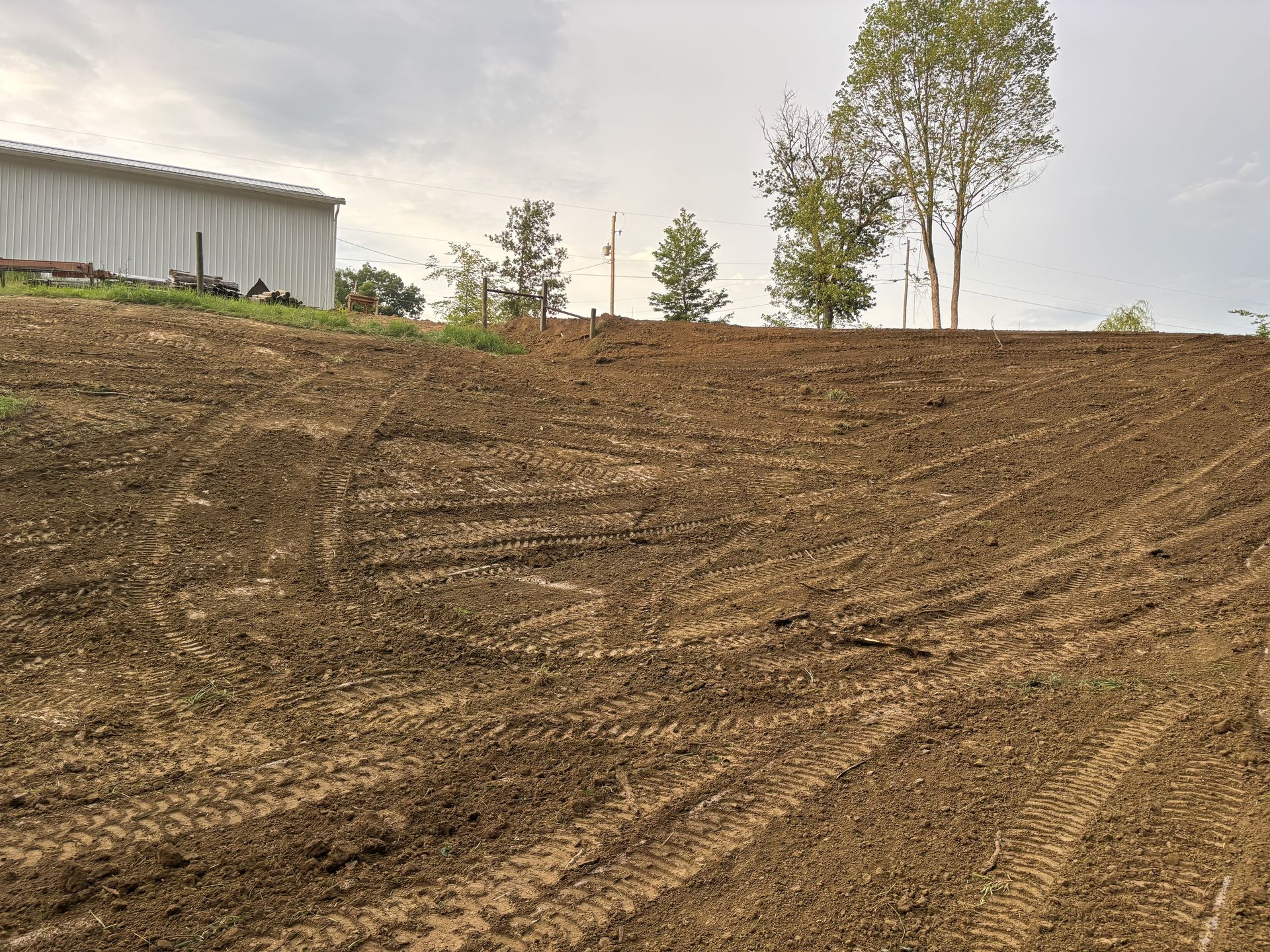
Slopes That Actually Move Water Away
Grading Services in Zanesville for drainage correction, building pad preparation, and driveway installation
Standing water against a foundation or pooling in a driveway signals that the surrounding grade no longer directs runoff where it needs to go. Old Iron Land Works llc provides grading services throughout Zanesville and central Ohio, reshaping terrain to correct drainage failures, prepare stable building pads, and create access routes that resist washouts during heavy rain. The work involves precise slope management that accounts for how water behaves on clay-heavy soils common in this region, where even minor grade errors cause persistent pooling and erosion.
Grading corrects elevation problems by removing high spots that block water flow, filling depressions where runoff collects, and establishing consistent slopes that move water toward planned drainage areas. Finish grading creates the final surface ready for seeding, paving, or construction, while rough grading handles larger earthmoving and initial site contouring.
Request a grading evaluation to identify slope, drainage, and site preparation requirements.
What Grading Actually Accomplishes
Proper grading establishes fall rates steep enough to prevent standing water but gentle enough to avoid erosion during runoff events. Equipment operators use laser levels and grade stakes to maintain precise elevations across the site, ensuring that finished surfaces drain uniformly rather than creating new low spots. On properties with challenging layouts or multiple drainage directions, grading work includes building swales or berms that intercept runoff before it reaches vulnerable areas like foundations, septic systems, or landscaping.
After grading, property owners notice that driveways no longer develop ruts where water pools, building pads remain dry during storms instead of collecting runoff from surrounding terrain, and yard areas drain quickly enough that grass can establish without drowning in saturated soil. The elimination of standing water also reduces mosquito breeding areas and prevents the freeze-thaw damage that occurs when pooled water expands in winter months.
Grading projects vary in scope depending on how severely the existing grade has failed and what the property will be used for. Residential lots preparing for construction require stable, level building pads and access routes graded to handle delivery trucks and equipment. Agricultural properties may need contouring that reduces erosion on slopes while maintaining field access, and pond projects often include perimeter grading to control sediment inflow and prevent bank instability.
What Property Owners Usually Ask
Questions about grading typically focus on how slope corrections prevent future drainage problems and what determines the extent of earthmoving required.
What slope is needed to move water away from structures?
A minimum slope of two percent, or about one-quarter inch of drop per foot, keeps water moving without allowing it to pool. Steeper slopes drain faster but increase erosion risk if the surface is not stabilized with vegetation or hardscaping.
How does grading prevent driveway washouts during heavy rain?
Grading establishes a crowned or sloped surface that sheds water to the sides rather than allowing it to run straight down the length of the driveway, where it would concentrate and erode the base material over time.
When should finish grading happen relative to other site work?
Finish grading occurs after all underground utilities, drainage systems, and heavy construction traffic have been completed, so that the final surface is not disturbed or compacted by subsequent activity.
Why does clay soil in Ohio make drainage grading more critical?
Clay drains slowly and compacts under traffic or heavy rain, creating hardpan layers that prevent water infiltration. Without proper grading to move surface water away, clay-heavy properties develop persistent wet spots that damage foundations, kill vegetation, and make access routes impassable during wet weather.
What equipment achieves the precision needed for finish grading?
Laser-guided scrapers and grading blades maintain elevations within fractions of an inch across large areas, ensuring that finished surfaces meet design specifications for drainage without manual rework or settling issues.
Old Iron Land Works llc plans grading work around each property's existing terrain, drainage challenges, and intended use. Contact us to discuss your site's specific elevation issues and schedule a detailed project estimate.